LLC Cap Table Terminology Guide
Understanding your cap table in Carta
When you set up equity for your LLC in Carta, a few terms come up immediately — share classes, equity plans, outstanding, fully diluted. This guide breaks them down so you always know what you're looking at.
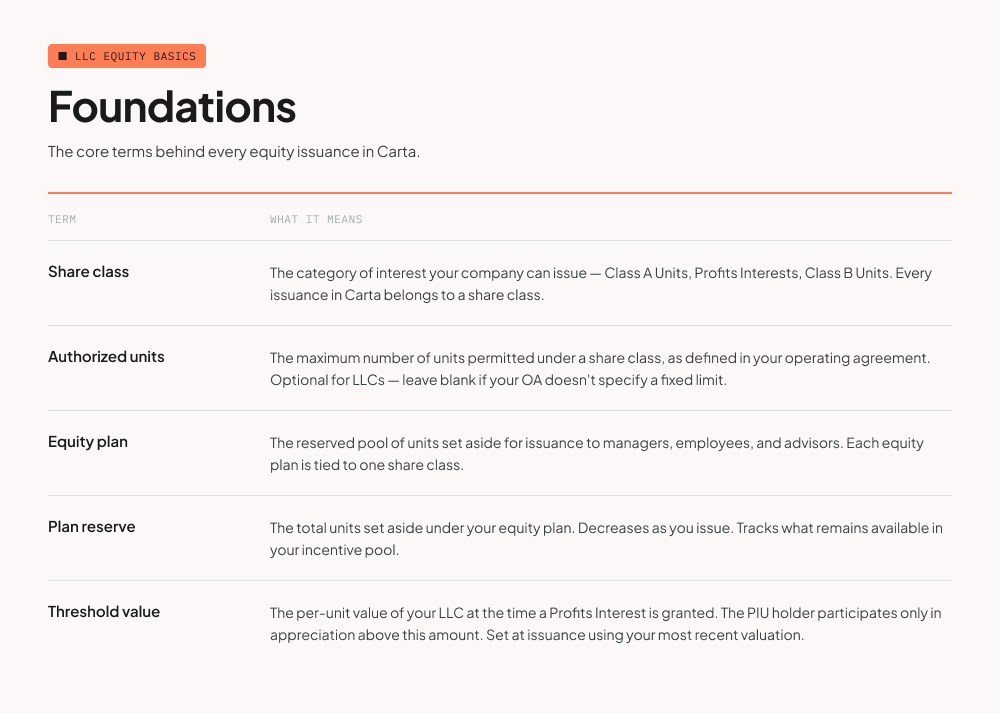
How Carta organizes your LLC cap table
Everything in Carta follows the same sequence:
Share (unit) class → Equity plan → Issuance → Cap table
Your unit class defines what type of interest you can issue. Your equity plan is the pool units are drawn from. An issuance is the individual grant. And your cap table is where it all lands — in either the outstanding or fully diluted column.
Interest types: what you can issue
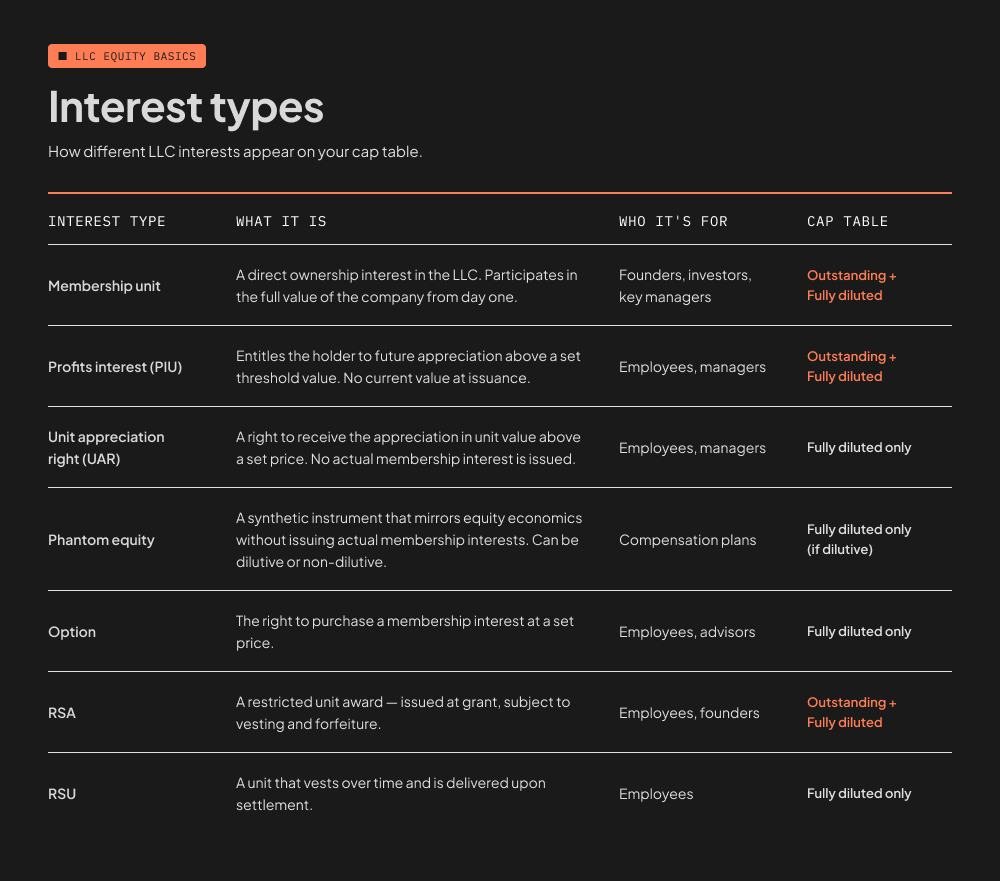
Carta supports several types of LLC equity. Each one behaves differently on the cap table — here's the breakdown.
Reading your cap table
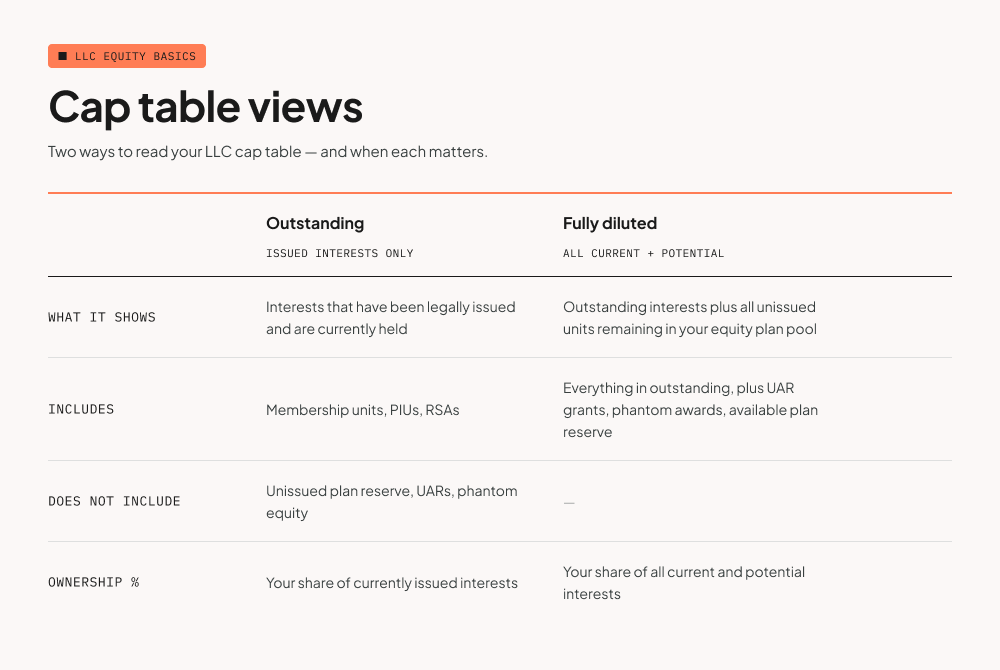
When you look at your cap table in Carta, you'll see two numbers for each holder: outstanding and fully diluted. They measure different things.
One thing to know about Profits Interests
When you issue a PIU, it appears in the outstanding column immediately — even if there's a vesting schedule attached. This is because a PIU is a legally issued interest at the time of grant. Vesting determines forfeiture conditions, not when the interest is created.
This means your outstanding count reflects legal issuance, not current economic value. A PIU holder with a threshold above today's company value is legally outstanding — but they participate only once the company's value exceeds their threshold.
One plan, one share class
When you create an equity plan in Carta, you'll associate it with one share class. If your management incentive program covers more than one type of interest — for example, Profits Interests and a separate unit class — you'll set up a separate plan for each in Carta. This keeps your pool tracking accurate and your cap table organized.